 My Corner of the Web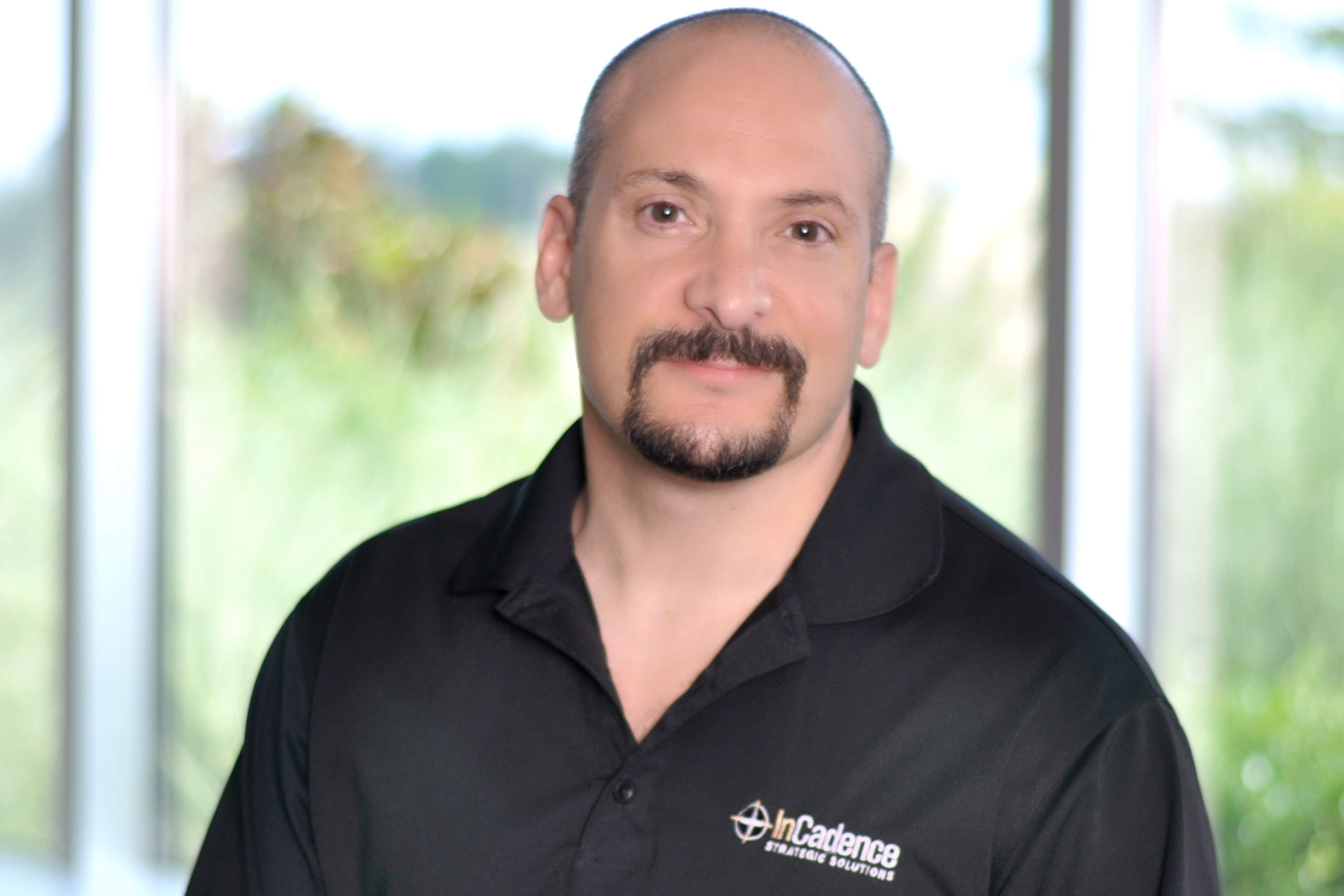


Michael C. Daconta
Synopsis
Mr. Daconta is a well-known author, technologist and leader having authored or co-authored 14 books (13 technical and 1 philosophy), numerous magazine articles and online columns. Previously, Mr. Daconta was the Metadata Program Manager for the Department of Homeland Security where he spear-headed data standardization, stewardship, and metadata registration. He was selected by the Office of Management and Budget and the Federal CIO Council to lead the Federal Enterprise Architecture (FEA) Data Reference Model (DRM) Working group which successfully delivered DRM V2.0 in December 2005. In conjunction with the Department of Justice he launched the National Information Exchange Model (NIEM) to provide a reusable set of core XML components for building exchange packages. For his work at DHS, Mr. Daconta was selected to the prestigious “Fed 100” by Federal Computer Week magazine. Other past assignments include the Chief Architect of the Defense Intelligence Agency’s Virtual Knowledge Base Project and designer of the electronic mortgage XML standard for Fannie Mae. Mr. Daconta was awarded patent #7299408 by the USPTO for his electronic document validator he invented for Fannie Mae. Recent books include “The Great Cloud Migration: Your roadmap to Cloud Computing, Big Data and Linked Data” and “Lazy Programmers: The Good, the Bad and the Ugly”. His other books cover Information Management, the Semantic Web, XML, XUL, Java, C++ and C.
Mr. Daconta’s experience spans over thirty-two years in Software Development, System Architecture and Enterprise Data Management. He has personally developed large-scale computing systems, led numerous development teams, and brought forth innovations in the areas of simulations, telemedicine, and Intelligence processing. Mr. Daconta began his career as a Military Intelligence Officer and has since worked on many projects for the Intelligence community. He earned his master’s degree in Computer Science from Nova Southeastern University (NSU) and his bachelor’s degree in Computer Science from New York University (NYU).
Books
Lazy Programmers: The Good, The Bad and The Ugly (2021) • The Philosophy of Intentional Living: A Proven Approach to Holistic Success (2019) • The Great Cloud Migration: Your Roadmap to Cloud Computing, Big Data and Linked Data (2014) • Information As Product: How to Deliver the Right Information to the Right Person at the Right Time (2007) • The Semantic Web: A guide to the future of XML, Web Services and Knowledge Management (2003) • More Java Pitfalls (2003) • Essential XUL Programming (2001) • Java Pitfalls (2000) • XML Development with Java 2 (2000) • Java 2 and JavaScript for C and C++ Programmers (2000) • Java 1.2 and JavaScript for C and C++ Programmers (1997) • Java for C/C++ Programmers (1996) • C++ Pointers and Dynamic Memory Management (1995) • C Pointers and Dynamic Memory Management (1993)
Patents
• Patent #7299408: Electronic document validation - This invention, a business rules engine, was developed during the work for Fannie Mae on electronic mortgages as described below.
• Patent #7818657: Electronic Mortgage document format - This invention was developed during the work for Fannie Mae on electronic mortgages as described below.
Experience
June 2020 - Present
Systems Architect/Consultant to Lockheed Martin, Inc.
After InCadence Strategic Solutions was acquired by Xator, Mr. Daconta transitioned to a consultant on the same project for the same customer (Lockheed Martin). As discussed in more detail below, the system is a Big Data system for the United States Navy. Mr. Daconta is currently the Subject Matter Expert (SME) for the system’s data storage subsystem. Mr. Daconta has designed and implemented significant portions of the system to include the database transactions layer, a Hadoop File System storage layer, the caching architecture, HDF5 implementation and numerous optimizations. Mr. Daconta is often called upon to brief the customer on critical design issues. He also regularly creates training for the entire program and takes time to mentor junior software engineers.
Feb 2012 – June 2020
VP of Advanced Technology/Incadence Strategic Solutions, Inc.
As Vice President of Advanced Technology, Mr. Daconta supported numerous government customers and performed advanced technology insertion into existing InCadence programs. From 2013 onward, Mr. Daconta served as the Data Storage Subsystem (DSS) lead for an Office of Naval Intelligence (ONI) modernization program. Under this effort, Mr. Daconta led a team of systems engineers and software developers to design and implement a sophisticated data abstraction layer that supported relational queries (postgresql), graph queries (neo4j), geospatial queries (postgis), free-text search (elasticsearch) and data pedigree. The data storage subsystem also includes a Multi-tiered Storage subsystem that leverages Hadoop for massive volumes of sensor data, prioritized file migration, offline storage and both full and incremental backup. From 2012 to 2013, Mr. Daconta supported the Office of the Director of National Intelligence (ODNI) Personnel Security Group and the Florida Department of Law Enforcement (FDLE). For FDLE, Mr. Daconta accepted the challenging position of redesigning a twice-failed project called the Florida Law-Enforcement Exchange (FLEX). He designed an Enterprise Service Bus based Message Broker that leveraged the National Information Exchange Model for the payloads.
june 2008 – feb 2012
CTO & Co-Founder/Accelerated Information Management, LLC
In his capacity as CTO, Mr. Daconta led multiple teams and projects for government agencies. For the Office of the Director of National Intelligence (ODNI), Mr. Daconta developed a web-based project Dashboard and Knowledge Management System. For the same customer, he also led the development of a Physical Security Data Model and NIEM-Based Information Exchange Model for the Joint Clearance Reform Effort. For the Transportation Security Administration (TSA), Mr. Daconta led a 5-member data quality team to profile, cleanse, and standardize all data being fed into the Human Resources Data Warehouse. For the National Marine Fisheries Service (NMFS), Mr. Daconta created a Service-Oriented Architecture (SOA) and led a small team to implement it. For the Federal Student Aid Office of the Department of Education, Mr. Daconta implemented a business glossary using IBM Infosphere. For the Federal Aviation Administration (FAA), Mr.Daconta implemented a proof-of-concept metadata architecture and catalog.
jan 2006 – June 2008
VP of Enterprise Data Management/Oberon Associates, Inc.
Mr. Daconta started and led a new division of Oberon Associates divided into two sub-divisions with 14 employees. In this capacity he led multiple data management projects for both external customers and internal initiatives. For the Transportation Security Administration (TSA) he developed, launched and staffed an Enterprise Data Management Program modeled after his work as a government official for the Department of Homeland Security (see below). Mr. Daconta personally developed the vision, direction, and strategy for the program. That strategy included a metadata catalog and a Data Warehouse Strategy. For the DHS Preparedness Directorate, Mr. Daconta developed the architecture for a Service Oriented Architecture using an Enterprise Service Bus.
Aug 2004 – jan 2006
Metadata Program Manager/Department of Homeland Security (DHS)
As a senior government official, Mr. Daconta managed the DHS Metadata Center of Excellence to provide enterprise standards and services for data interoperability, reuse and discovery across DHS. Mr. Daconta developed an Enterprise Data Management Strategy for the department, led the DHS Metadata Working Group and created a data standardization process for the department. He also launched a metadata repository initiative for the storage, definition and collection of metadata artifacts. Mr. Daconta was selected by the Office of Management and Budget and the CIO Council to lead the Federal Enterprise Architecture (FEA) Data Reference Model (DRM) Working group to spearhead these same initiatives across the entire federal government. The DRM WG successfully completed its work and delivered the DRM V2.0 model to the Federal CIO Council on October 17, 2005. In conjunction with the Department of Justice (DOJ), Mr. Daconta launched the National Information Exchange Model (NIEM) to provide a reusable set of core XML components for building exchange messages across the federal government. The NIEM PMO, under his leadership, successfully released version 0.1 on September 30, 2005.
Mar 2004 – aug 2004
Principal Architect/Oberon Associates, Inc.
After a move back to Arizona, Mr. Daconta developed an ESRI mapping component for the Army’s Biometrics Automated Toolset (BAT).
FEB 2000 – mar 2004
Chief Scientist/McDonald Bradley, Inc.
As Chief Scientist, Mr. Daconta provided senior-level vision and guidance both internally and externally on the Semantic Web, Knowledge Management, XML and Java. He was selected by DISA to lead the DOD/IC Core Taxonomy working group. He was instrumental in creating the first version of the DoD Discovery Metadata Specification (DDMS). For the Defense Intelligence Agency (DIA), he served as the Chief Architect of the Virtual Knowledge Base project that leveraged semantics, ontologies, and a service-oriented-architecture to simplify information discovery across the DIA. For Fannie Mae, Mr. Daconta invented two patented technologies. He authored the eMortage Document Specification that detailed the XML format and Document Type Definition (DTD) to store the combined View, Data Model, semantic linkages and security for an electronic mortgage. He further shepherded the eMortgage standard through the standardization process to become an adopted MISMO (www.mismo.org) specification. Furthermore, he invented and developed the Fannie Mae eMortage rule-based validator with a team of three developers.
mar 1999 – FEB 2000
Founder and President/Synergy Solutions, Inc.
Mr. Daconta formed a company focused on training, consulting and product development. McDonald Bradley, Inc. acquired the company in August 2000. Prior to the acquisition, Mr. Daconta implemented several software systems including an online brokerage, LDAP management system and custom SOAP server. Additionally, he performed training courses for /training/etc as a Java/XML instructor.
1998 – Mar 1999
Chief Scientist/Sterling Software, Inc. (Acquired Mystech Associates)
Mr. Daconta worked for Mystech Associates in various capacities for almost a decade. Mystech Associates was acquired by Sterling Software in 1998. In his capacity as Chief Scientist, Mr. Daconta supported multiple projects including rescuing a System after the failure of its Government Acceptance test. This Java-based system would take up to 30 minutes for queries under peak load. Mr. Daconta sped up the system by over 2000% and it subsequently passed its acceptance test.
1998 – Dec 1998
Technical Director/Mystech Associates, Inc.
As Technical Director, Mr. Daconta spearheaded the company’s move to Java and XML by conducting numerous training courses and developing a JDBC driver for the company’s flagship Intelligence processing system (called Hawkeye).
1996 – 1997
Chief Developer/Telemedicine Applications Company (Mystech spinoff)
Mr. Daconta was the chief designer and developer of the TeleProvider™ Telemedicine Workstation. The system was successfully tested in major hospitals including Samsung Medical Center, Stanford University, and New York Eye and Ear. Mr. Daconta led a small team that developed the medical record system, whiteboard, and teleconferencing interface. Mr. Daconta also developed a Java based DICOM viewer that successfully presented radiology images in a Java applet.
1991 – 1996
Technical Site Manager/Mystech Associates, Inc.
As Technical Site Manager, Mr. Daconta was responsible for technical coordination and integration of all company development projects in Arizona. To that end, he conducted training and implemented an on-site technical library to improve staff proficiency. For the United States Army Intelligence Center and School (USAICS), he developed an Operations Other Than War (OOTW) simulation in the Java programming language that included database retrieval, a mapping system and graphical user interface. He also led a team in the development of an innovative simulation called the High-Resolution System Stimulator (HRSS) that simulated a Virtual Unmanned Aerial Vehicle (UAV) on 3D terrain. The simulation successfully modeled over 300,000 entities and detailed Battle Damage activity in the Prairie Warrior 95 Exercise.
1990 – 1991
Software Engineer/RAM, Inc.
Mr. Daconta developed document and software maintenance standards for a large Intelligence processing system.
1987 – 1990
Programming Section Chief & Platoon Leader/U.S. Army
Stationed in South Korea and in Ft. Huachuca Arizona. For the U.S. Army Intelligence Center and School (USAICS), Mr. Daconta developed several military simulations used in large-scale training exercises.
Education
May 2003
Master of Science in Computer Science (MSCS)/Nova Southeastern University
Mar 1998
Sun Certified Java Programmer/Sun Microsystems, Inc.
May 1987
Bachelor of Arts in Computer Science (BACS)/New York University
Online Articles
· XML.com, “Formal Taxonomies for the Federal Government”, January 26, 2005. http://www.xml.com/pub/a/2005/01/26/formtax.html
· Open Source Developers Network, “Philosophical Split hurts Web Services Adoption”, July 2003,
available at http://www.devchannel.org/webserviceschannel/03/07/11/2122220.shtml?tid=25&tid=38.
· JavaWorld.com - multi-part series on Java Pitfalls.
· ZDNet.com - opinion/editorial column on the future of Java. One popular editorial featured on Yahoo.
· FedTech Magazine, Feature article, “Xml Marks the Spot.”, November 2005.
· Enterprise Architect Magazine, Feature article, “Smart Data for Smart Business: 10 ways Semantic computing will transform IT.”, February 2004.
· Government Computer News, “Taxonomy’s not just design, it’s an art”, February 9, 2004.
· XML Journal, “Are elements and attributes interchangeable?”, June 2001
Clearance
Top Secret with Special Background Investigation and CI Polygraph.